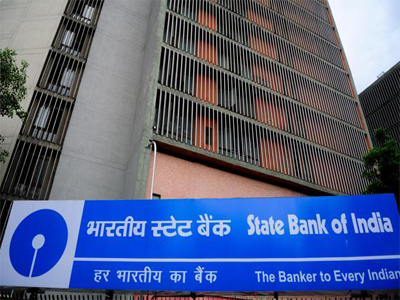
| Mumbai: State Bank of India will be more cautious in converting loans into a majority equity holding under the strategic debt restructuring (SDR) scheme after a surge in such cases raised questions over the ability of banks to sell these stressed assets within the 18 months given to them. The top management of India’s biggest lender has asked its officials to invoke SDR only in cases where there is clarity on a potential buyer, two people with direct knowledge of the development confirmed. Under the SDR plan, designed to give bankers greater control over defaulting firms, banks are allowed to convert debt into equity and find a buyer for the asset within 18 months. They are also allowed to bring in a new management to turnaround the company. While the Reserve Bank of India (RBI) intended banks to use the rules to clean up their balance sheets, some lenders, analysts say, may have used it to avoid higher provisioning for the 18-month period. In just six months since the rules came into effect, banks have invoked this provision for 15 firms with loans of Rs.83,100 crore, according to a 4 January report by Religare Institutional Research. Religare said the SDR mechanism will defer recognition of loans worth Rs.1.5 trillion as non-performing assets (NPAs), without solving the core bad asset problem. A number of companies, where banks converted debt into a controlling equity stake, belonged to stressed sectors such as steel and infrastructure where buyers may not be easy to find. These concerns have been raised by analysts, and even the regulator is closely monitoring and reviewing the scheme. “The (SBI) meetings came after a number of media and analyst reports criticized banks on their move to go for SDR to avoid higher provisioning for the 18-month period, rather than to rehabilitate the defaulting company by changing management,” said one of the two people cited above who is a stressed-asset-turnaround specialist. The SBI management has been meeting with experts since December, trying to understand the impact of SDR and whether applying it to multiple cases is the right approach, said the person, requesting anonymity because of the confidential nature of these conversations. SBI did not respond to a detailed questionnaire seeking comments on Thursday. Another reason for the SBI directive to its officers is the increased scrutiny by RBI on the implementation of schemes like the SDR and 5/25, which allows banks to extend tenor of loans given to infrastructure firms to match the life cycle of these projects. On Friday, Mint reported that the banking regulator has conducted an intensive review of asset quality and asked banks to make additional provisions for stressed loans over the remainder of the financial year as part of a major clean-up of balance sheets. RBI will also meet select banks on 18 January to review schemes like SDR and 5/25. Another reason that the SBI management is keen to go slow on using SDR is that banks are finding it tougher than expected to replace existing managements in companies where they have converted debt to equity. In most cases, the same managers are still running the company which may defeat the purpose of the scheme. “Since many of these companies are promoter-driven, the management is usually part of the promoter family, which was always a point of contention. Bankers were concerned whether there will be repercussions due to appointment of an interim management overnight,” said the second person cited above. Banks have tried to ensure that there is a clear mandate for conversion of loans to equity from each company’s board so that the promoter and management are part of the revival plan. This, however, can also be counter-productive since it may prevent any dramatic changes from being implemented to help revive the firm. “The bankers already had pledged shares as part of the CDR (corporate debt restructuring) package where promoters have agreed that conversion can be initiated in case of a default. So, they don’t need a board approval for the second time. But this is done to make the promoter feel a part of the process,” the second person said. By virtue of being the largest lender in India, SBI is present in a large number of cases where banks have invoked SDR to convert debt to majority equity. While SDR has so far been invoked in 15 accounts with outstanding loans of Rs.83,100 crore, Religare Institutional Research estimates that another Rs.63,900 crore worth of loans will enter the SDR process in next 12 to 24 months. In a report on 7 December, Credit Suisse had pointed out that a large number of cases where banks have invoked SDR are cases where CDR has already failed leading these accounts to the brink of becoming NPAs. “Given the lack of disclosure requirement on SDR and built-in 18-month dispensations on asset classification, it appears to be getting used more for deferring provisioning,” the Credit Suisse report had said. While announcing the monetary policy on 1 December, RBI governor Raghuram Rajan had said that the central bank is in constant dialogue with banks and is insisting that the facilities provided to them to clean up their balance sheets are being used in the right way. At the same meeting, Rajan said that he expects banks to do enough to clean up their balance sheets by March 2017, setting a deadline for the banking industry. “While invoking SDR only in cases where there is a possibility of a sale at reasonable value is expected of banks, one must also look at the large level of stress which has forced banks to consider this option. Being the largest bank in the system, SBI will have the flexibility of slowing down on this route, but it needs to be seen how other public sector banks adapt to it,” said Saswata Guha, director financial institutions, Fitch Ratings. The gross NPA ratio of the banking system was about 5.1% of gross advances as of 30 September, according to the December edition of the RBI’s Financial Stability Review. The ratio of stressed advances (including restructured loans and gross bad loans) to total advances rose to 11.3% as of September from 11.1% in March. The ratio of stressed assets in public sector banks was 14.1% in September, RBI said in its report. |